
Día De Los Muertos For Kids: A Family Guide
 Kate Shaw
This post may contain affiliate links. As an Amazon Associate, I earn from qualifying purchases.
Halloween candy is barely put away when your kid spots a skeleton covered in flowers and asks what it means. You might know it has something to do with Mexico, but you are not totally sure how to explain it. That moment is a great opening. Día de los Muertos gives your family a warm, hands on way to talk about memory, family, and loss.
Día de los Muertos runs every November 1 and 2, right after Halloween wraps up. This year, November 1 falls on a Sunday, which makes a weekend celebration easy to plan. Many schools, libraries, and community centers now host their own events. Your child may already be learning about it in class. Here is what the holiday means and how to introduce it to your family this year.
What Is Día De Los Muertos, Really?
Día de los Muertos translates to Day of the Dead, but the name misleads a lot of parents. It is not a scary holiday, and it is not “Mexican Halloween.” Families use the two days to welcome home the spirits of relatives who have died. They celebrate their lives and share food and stories together.
November 1 is often called Día de los Angelitos, a day set aside to remember children who have died. November 2 honors adults. Many families treat the whole stretch as one joyful, bittersweet weekend rather than splitting it strictly in two.
UNESCO added Día de los Muertos to its list of Intangible Cultural Heritage in 2008. The tone stays closer to a family reunion than a funeral. People paint their faces like skulls, but they laugh, play music, and tell stories about the person they are honoring.
How Did Día De Los Muertos Begin?
The holiday blends Indigenous Aztec beliefs about death with Catholic traditions brought by Spanish colonizers centuries ago. Aztec communities already held rituals honoring ancestors long before contact with Europe. Those customs merged with All Saints’ Day and All Souls’ Day over time.
The now familiar skeleton figure, La Catrina, came much later. Cartoonist José Guadalupe Posada drew her in the early 1900s as political satire about Mexican society. Artist Diego Rivera later featured her in a famous mural, and she became the holiday’s unofficial mascot.
Many American kids met the holiday for the first time through Pixar’s 2017 film “Coco.” The movie follows a boy who travels through the land of the dead to meet his ancestors. That movie works as a gentle entry point before you try the traditions below.
What Belongs On A Día De Los Muertos Ofrenda?
An ofrenda is a home altar families build to welcome deceased relatives back for the weekend. Kids usually love building one because it works like a hands on memory project rather than a lecture about death.
A traditional ofrenda includes a photo of the person it honors, so the spirit can recognize the altar. Cempasúchil, or marigolds, line the altar because their bright color and strong scent supposedly guide spirits home. Families add pan de muerto, a sweet bread shaped like bones. They also add the person’s favorite foods and drinks from when they were alive.
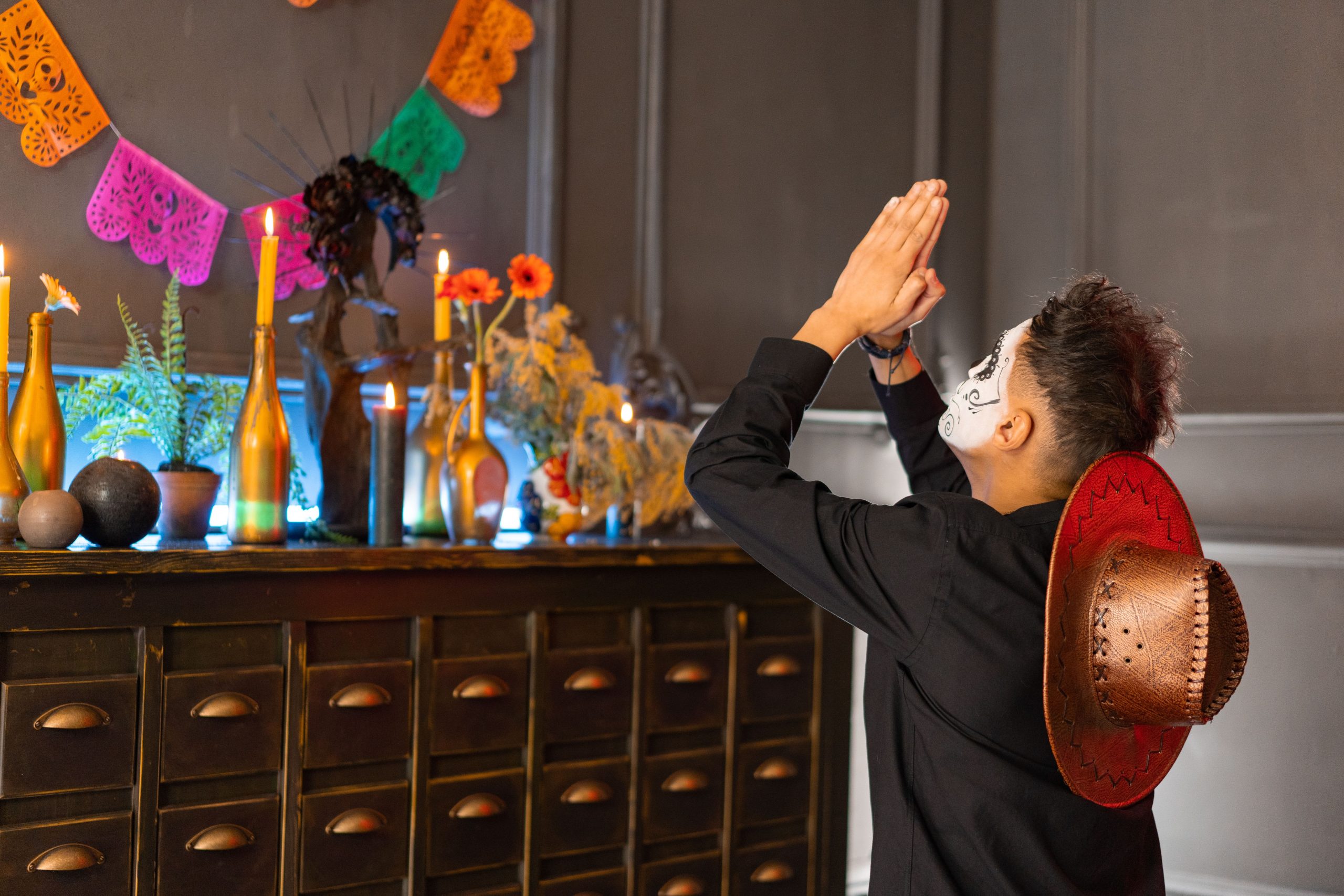
Calaveras, or sugar skulls, often sit on the altar too. Many sugar skulls carry the name of a living family member instead of the deceased. That turns them into a personalized gift, not a creepy decoration. Candles and papel picado, colorful cut paper banners, round out a typical display.
How Do You Explain Día De Los Muertos To Kids?
Keep your explanation simple and warm. Tell your child that some families set aside a special weekend to remember loved ones who have died. Encourage them to remember the fun parts of knowing that person too. Avoid framing it as spooky, since the holiday is meant to feel warm, not scary.
If your family has lost someone, this can open a real conversation about grief in an age-appropriate way. Child development experts recommend clear, honest language over euphemisms like “went to sleep.” Vague phrasing confuses young kids. Cleveland Clinic offers practical guidance on how to explain death to a child at different ages.
You do not need a personal loss to introduce the holiday. Many families use it simply to talk about grandparents, pets, or other relatives who have passed. The ofrenda works like a photo album with added meaning.
How Can Families Celebrate Día De Los Muertos Respectfully?
If your family is not Mexican or Latino, you can still take part thoughtfully. Treat the holiday as a cultural tradition you are learning about and honoring. It is not a costume theme or an aesthetic to borrow for likes. Skip painting your child’s face like a sugar skull just for Halloween. That turns a meaningful symbol into a punchline.
Instead, read books about the holiday’s real history or watch “Coco” together. If your area hosts one, visit a local Día de los Muertos festival. Many cities run public events specifically meant to welcome newcomers to the tradition. Buying from Latino-owned shops for marigolds, pan de muerto, or decorations also supports the communities the holiday belongs to.
Many families already build family Halloween costumes together every October. Redirect that same creativity into an ofrenda instead of matching face paint.
Fun Día De Los Muertos Activities For Kids By Age
| Age Range | Activity | Why It Works |
|---|---|---|
| 2 to 4 | Decorate a paper marigold or skull craft | Simple motor skills, bright colors kids enjoy |
| 5 to 8 | Help build a small family ofrenda | Concrete way to talk about memory and family history |
| 9 to 12 | Research a relative’s life story to add to the altar | Builds curiosity about family history and empathy |
| Whole family | Watch “Coco” and talk about favorite memories afterward | Shared, low pressure way to open the conversation |
Try This Week
Start small instead of planning an elaborate event right away.
- Ask grandparents or older relatives for one photo of a loved one who has died
- Pick up marigolds or a marigold craft kit at a local store
- Read one children’s book about Día de los Muertos together
- Watch “Coco” as a family movie night
- Let your child pick one favorite food of a relative to include on a small altar
- Write one memory or story about that person together
- Visit a local library or community Día de los Muertos event if one is nearby
- Talk openly if your child asks questions about death during the process
- Skip any costume or face paint tied to the holiday unless your family celebrates it
- Keep the tone warm and celebratory rather than somber
Final Thoughts
Día de los Muertos gives your family a gentle, structured way to talk about people you have loved and lost. The marigolds, photos, and favorite foods turn a hard topic into something your kids can touch and build. Start with one small activity this week, and let your child’s questions guide how far you go from there.
Photo by Mikhail Nilov: Pexels

 Sylvia Donchev

 JayDee Vykoukal


 Elaine Wilson

 Mercy Kambura
