
Halloween Anxiety In Kids: Why It Happens And How To Help
 Farah
Farah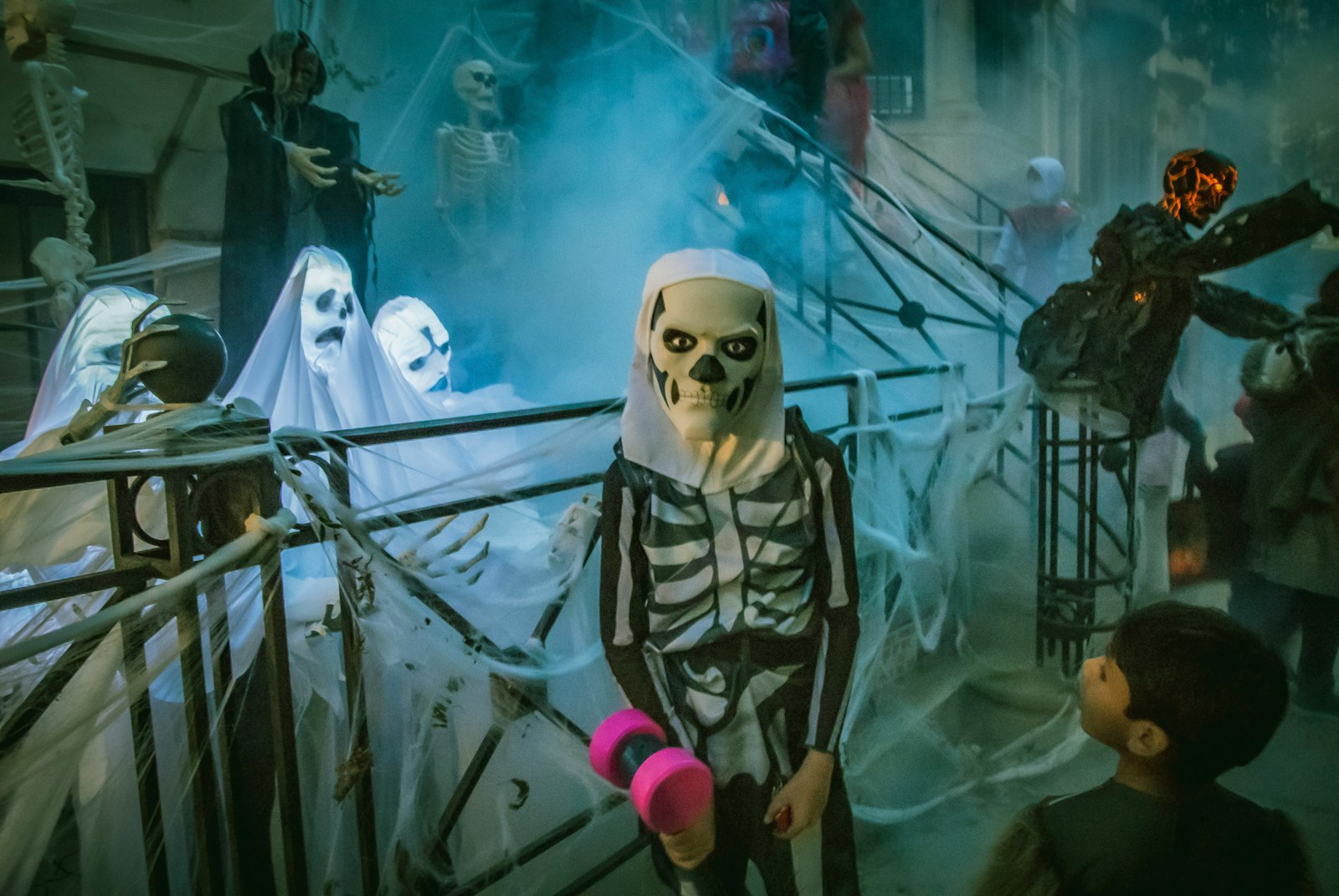
This post may contain affiliate links. As an Amazon Associate, I earn from qualifying purchases.
For many families, Halloween means costumes, candy, and weeks of excitement. For others, the countdown to October 31 brings tears, clinginess, or a flat refusal to leave the house after dark. Halloween anxiety in kids is a real and common experience, not a sign that a child is overly sensitive or that parents are doing something wrong. Between the fog machines, jump scares, strangers at the door, and decorations that turn front yards into something closer to a haunted set, Halloween asks young nervous systems to process a lot of unfamiliar input at once. Understanding why this holiday hits differently for some kids makes it much easier to help them enjoy it instead of dread it.
Why Halloween Triggers Anxiety In Kids
Young children are still learning to tell the difference between pretend and real, which is exactly why a giant inflatable skeleton or a neighbor dressed as a zombie can feel genuinely threatening rather than fun. A toddler or preschooler does not yet have the cognitive tools to reliably separate a costume from a real monster, so a reaction that looks like overreacting to an adult is a completely rational response from a brain still building that skill. Add in strobing lights, sudden noises from motion-activated decorations, and crowds of strangers in disguise, and Halloween packs an unusual number of fear triggers into one night.
Older kids are not immune either. Anxious or sensory-sensitive children of any age can find Halloween’s unpredictability overwhelming, since a normal trick-or-treating route offers no way to know which house has a smoke machine, a hidden speaker, or a teenager planning to jump out from behind a bush. Kids who already deal with generalized anxiety, autism, or sensory processing differences often feel this most intensely, but plenty of otherwise easygoing kids also go through a season or two of genuine Halloween fear before growing out of it.
Common Signs Of Halloween Anxiety In Kids
Halloween anxiety does not always look like crying at a scary decoration. It can show up as a sudden refusal to wear the costume your child picked out weeks earlier, trouble sleeping in the nights leading up to Halloween, clinginess during school parties or parades, or a flat statement that they would rather stay home. Some kids ask repeated questions about what will happen that night, often less out of curiosity and more to predict and control an evening that otherwise feels unpredictable. Physical complaints like a stomachache or headache right before a Halloween event are also common, especially in kids too young to name the feeling as anxiety.
Parents sometimes miss these signs because the same child seemed excited about Halloween just days before. Anticipatory anxiety can build quietly and then spike close to the actual event, so a child who was thrilled about a costume in early October can still end up overwhelmed on the night itself. That shift is not inconsistency. It shows that the sensory and social demands of the night are different from what it feels like to imagine in advance.
Age Matters More Than You Think
A two- or three-year-old’s fear of a motion-activated witch is developmentally typical and usually resolves with reassurance and some distance from the trigger. By kindergarten and early elementary school, most kids start to understand the difference between pretend and real, though a loud jump scare can still catch anyone off guard regardless of age. Tweens and teens are less likely to be scared by decorations themselves, but social anxiety, sensory overload in crowds, or past negative experiences can still make the holiday stressful in a different way. Matching your response to your child’s actual developmental stage, rather than assuming a fear “should” be outgrown by a certain age, makes it easier to respond with patience instead of frustration.
How To Help A Child Who Is Scared Of Halloween
Take the fear seriously instead of dismissing it, even when the trigger seems small to an adult. Saying “that’s not real, there’s nothing to be scared of” tends to shut a child down rather than reassure them, while naming the feeling out loud, “that skeleton moved and it startled you,” helps a child feel understood and gives language to something they may not be able to explain yet. From there, a short walk past a scary decoration during daylight, well before trick-or-treating begins, lets your child see the “monster” up close in a calm setting and often takes most of its power by nightfall.
Letting your child set the pace matters more than finishing a planned route. Skipping a house with an elaborate scary setup, taking a break partway through the night, or ending early are all reasonable choices that keep Halloween a positive memory rather than something to dread next year. If your family already leans toward a quieter night, borrowing a few ideas from a sensory-friendly Halloween approach, like a softer costume, an earlier time slot, or noise-reducing headphones, can help an anxious child as much as it helps a sensory-sensitive one. Practicing what to say at the door ahead of time, and reminding your child they can hold your hand or stand a step behind you, also builds confidence before the actual night arrives.
When To Skip Trick-Or-Treating Altogether
Trick-or-treating isn’t mandatory, and some years a child simply isn’t ready for it. A smaller at-home celebration, like a movie, decorating cookies, or handing out candy from your porch, still counts as a full Halloween experience. According to the American Academy of Pediatrics, gradual, low-pressure exposure to a fear works better than forcing a child through it all at once, so an “easy” Halloween this year can set up an easier one next year. There is no prize for pushing through a night that leaves your child in tears, and choosing a calmer option is not giving in. It is meeting your child where they actually are.
Frequently Asked Questions
Is it normal for my child to be scared of Halloween? Yes. Fear of Halloween decorations, costumes, or the night’s general unpredictability is common and developmentally typical, especially for toddlers, preschoolers, and anxious or sensory-sensitive kids of any age.
Should I force my child to trick-or-treat if they are scared? No. Forcing a child through an overwhelming experience usually increases fear rather than building confidence. Gradual exposure and letting your child set the pace tends to work better over time.
How can I prepare an anxious child for Halloween in advance? Walk the planned route during daylight, talk through what the night will look like, let your child help choose a comfortable costume, and practice what to say at the door so nothing feels unfamiliar in the moment.
At what age do kids usually outgrow Halloween fears? Many children become less frightened by Halloween decorations once they reliably understand the difference between pretend and real, often by early elementary school, though every child develops at a different pace.
Final Thoughts
Halloween anxiety in kids is common, temporary for most families, and very manageable with a few small adjustments. Take the fear seriously, preview scary decorations in daylight, and let your child set the pace to turn a dreaded night into one they can actually enjoy. Some years that means a full night of trick-or-treating; other years, it means candy and a movie on the couch, and both make for a perfectly good Halloween.
Photo by Clay LeConey: Unsplash

 JayDee Vykoukal
 Mercy Kambura


 Kate Shaw