
Sharenting: Is It Safe to Post Pictures of Your Kids Online in 2026?
 kellybryson
This post may contain affiliate links. As an Amazon Associate, I earn from qualifying purchases.
It’s back-to-school week, and your feed is about to fill with first-day-of-school photos. Backpacks bigger than the kids wearing them. Hand-lettered signs with grade and teacher’s name. The classic then-versus-now comparison shot. It’s a tradition, and it’s adorable. Experts call this kind of post sharenting. Researchers, police departments, and privacy lawyers now say it carries real risk too.
Parents have shared photos, videos, milestones, and personal details about their kids online for years. This isn’t new. But the conversation around sharenting shifted hard in 2026. Two things drove that shift. AI image tools can now do far more with a single photo than they could two years ago. States also passed new laws to catch up.
If you run a mom blog, or you just post like the rest of us, here’s what’s actually going on. We’ll also cover how to share those moments without oversharing details that put your kid at risk.
What Is Sharenting, Exactly?
Sharenting combines two words: parent and sharing. The term covers any post that identifies a child. That includes a cute Instagram photo. It includes a TikTok about a tantrum. It includes a Facebook update about a diagnosis. It even includes a private story about your day.
Sharenting is common. Nominet’s research found something startling. The average parent posts almost 1,500 photos of their child before that child turns five. Security.org’s parenting and social media report backs this up. Over 75% of parents have shared a photo, video, or story about their kid online.
This trend is one of several modern parenting habits worth a second look, alongside other parenting trends we’ve unpacked before.
Most parents don’t share with bad intentions. We feel proud. We want to document our lives. We want to stay connected with family who live far away. The sharing itself isn’t the problem. The real issue is how much identifying information travels with each post, and who can actually see it.
The Real Risks Behind the Trend
1. Identity Theft Is Already Happening
This risk isn’t hypothetical. Security.org’s research found that 14% of parents reported their child had already experienced identity theft. Parents named social media as the top risk factor. Fifty-three percent pointed to it directly.
Part of the problem is simple. Eighty-one percent of parents post their child’s real name. Many posts also include birthdates, school names, hometowns, and daily routines. Identity thieves use exactly this kind of data. They open fraudulent accounts with it. They answer security questions with it.
Picture this combination: a child’s Social Security number, paired with their name, birthdate, and hometown. A proud parent might post all of that without a second thought. Kids often don’t discover the damage for years. They find out when they apply for a credit card. They find out when they try to get a car loan.
2. AI Has Changed What a Single Photo Can Do
This risk is the newest, and it’s the most unsettling. Researchers studied LAION-5B, a massive dataset that powers popular AI image generators. They reviewed 600 images. They found 41 identifiable photos of children inside that small sample, according to reporting from Just Security.
Some of those photos included the child’s name in the file URL. One photo included location data. That data revealed the child’s grandparents’ home address.
A clear photo of a child’s face can now enable serious misuse. AI tools can generate convincing fake images from just a handful of source photos. Reported harms already include the use of explicit AI-generated images by scammers for extortion. They also include scam calls that use AI-cloned children’s voices to fake a kidnapping. This sounds like a movie plot. It’s already happening to real families.
3. Police Are Now Warning Parents About Back-to-School Posts
This risk feels the most timely right now. Law enforcement agencies started flagging the back-to-school photo tradition directly. A single post often reveals a child’s full name. It reveals a school name, a grade, and a teacher. It often reveals a daily schedule too, all inside one caption.
One Illinois police department posted about this exact problem. Their message went viral fast. Their advice was simple: less is better when you post identifying details about kids.
4. Consent Rarely Enters the Conversation
Here’s a stat worth sitting with. Only 24% of parents ask their child for permission every time before posting about them. Roughly 29% never ask at all, according to Security.org. Teens confirmed this gap in the same survey. Thirty-two percent said a parent posted about them again after they’d asked the parent to stop. Kids don’t get a vote here. Parents build a digital footprint for them years before they understand what that footprint means. This gap explains why the conversation shifted. It moved from cute-or-not toward rights and consent.
The Law Is Starting to Catch Up
Does your kid content generate income? Maybe you run a family vlog. Maybe you post sponsored content featuring your kids. Maybe you monetize a “mom of four” TikTok account. New laws in several states now apply directly to you. Illinois requires compensation for kids 16 and under. This rule applies when a child appears in 30% or more of a creator’s monetized content within 30 days.
California requires creators to hold at least 15% of a child’s content earnings in trust. That trust stays locked until the child turns 18. Minnesota goes further. Every dollar of proceeds from content featuring a child under 14 must go to that child. Minors 13 and older can request that creators remove content featuring them. Utah recently joined this group too. The state added its own protections for child content creators.
These laws point to something bigger than compensation. Lawmakers now treat a child’s image as something that belongs to the child. It doesn’t only belong to the parent who’s free to post or monetize it. Kevin Franke’s family story became a national cautionary tale. He testified plainly: “Vlogging my family, putting my children into public social media, was wrong.” Not every family creator agrees with that framing. Many say responsible, monetized family content can work ethically. Still, the legal ground keeps shifting toward giving kids more say over their own image.
So Should You Stop Posting Your Kids Completely?
Not necessarily. Most of us won’t stop anyway. Sharing our kids’ lives keeps us connected to family. It helps us process the chaos of parenting. For many mom bloggers, it also builds community and income. The goal isn’t panic. The goal isn’t a total blackout either. The goal is intentional sharing. Pay attention to what leaves your hands. Pay attention to who can actually see it.
We approach screen time the same way. Research keeps showing that balance beats an all-or-nothing rule. The same logic applies to sharenting.
Privacy researchers and child safety experts recommend a few concrete steps:
- Lock down who can see it. A private account isn’t a perfect shield, but it’s still a real one. Security.org found that 57% of parents already use private settings. Many of those same parents follow hundreds of people they’ve never met in person. Privacy only works when your follower list matches your real-life circle.
- Skip the identifying combo. A photo alone usually poses little risk. A caption that adds a full name, school name, and grade level creates a real risk. That’s the exact combination behind the back-to-school police warnings.
- Think before you post a clear, tagged face. You don’t need to hide your kids from the internet. Try a different angle. Try a crop. Skip the face-forward shot sometimes. Small changes make a clear photo much harder to pull and reuse for AI misuse.
- Turn off location data and geotags. Strip metadata before you post. Avoid announcing real-time details like “we’re at this park every Tuesday.”
- Ask your kid, especially once they’re old enough to have an opinion. This won’t always work with a toddler. But you can build the habit early. Ask a 7-year-old, a 10-year-old, or a 14-year-old, “Is it okay if I post this?” That question protects their growing sense of privacy. It also teaches them that consent applies to them too.
- Know your state’s law if you monetize content featuring your kids. You might not live in Illinois, California, Minnesota, or Utah. More states will likely pass similar laws soon. Set aside earnings for your kids now, regardless of what your state currently requires.
The Bottom Line
Sharenting isn’t going away, and it shouldn’t have to. Documenting your family’s life is a genuinely good thing. Mom bloggers have built real communities and careers doing exactly that. But 2026 made one thing clear. “Cute photo” and “sensitive data” aren’t separate categories anymore.
A little more intention goes a long way. Think about who sees each post. Think about what details ride along with it. Think about whether your kid would be okay with it later. Small edits keep the same adorable photo. They cut your risk way down.
This back-to-school season, pause for two minutes before you hit post. Does this photo need the school name in the caption? Does it need to be public? Would your kid be okay with this later? Ask these questions every time.
FAQ: Sharenting and Kids’ Online Privacy
Is sharenting actually dangerous, or is this overblown? The risks are real, not hypothetical. In one survey, 14% of parents reported their child had already experienced identity theft. Social media ranked as the top contributing factor. Risk still scales with how much identifying detail you share and how public your account is. This is manageable, not a reason to panic.
What information should I never include in a photo caption about my kid? Avoid combining a full name, school name, grade, and daily schedule in one post. Any single detail carries low risk on its own. Stacked together, they build a full data profile.
Do child influencer laws apply to regular parents who aren’t monetizing content? No. The new laws in Illinois, California, Minnesota, and Utah specifically target monetized content and creator compensation. They don’t regulate personal, non-monetized posting. Several of them do address a minor’s right to request content removal.
Can AI really use a normal family photo to create fake images? Yes. Reporting on datasets like LAION-5B confirmed that these tools scraped identifiable children’s photos from public posts. Modern AI tools can generate convincing synthetic images or video from just a few source photos.
What’s the single easiest change I can make today? Set your account to private. Stop pairing full names with school details in captions. These two changes address the two most common risk factors in current research.
Photo by Vitaly Gariev: Unsplash

 JayDee Vykoukal
 Tess Dinapoli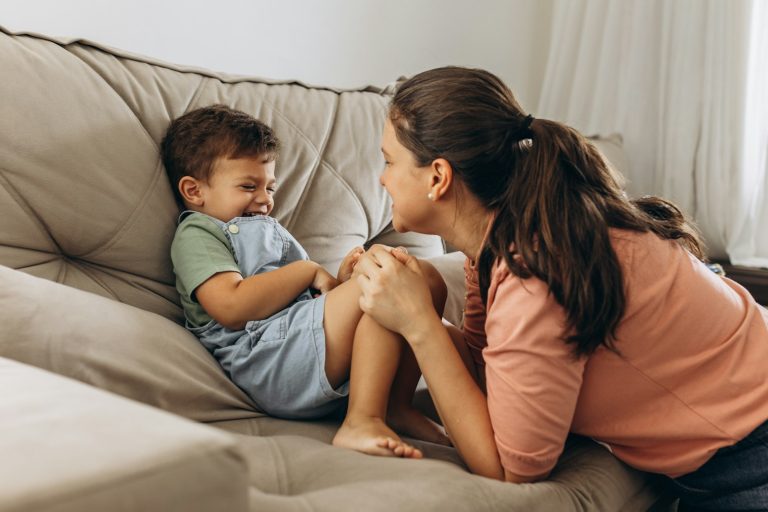
 Chelsy
 Farah
Farah
 Ayodele Akenzua
 Janine Segner