
When to Introduce a Pacifier Without Creating a Sleep Crutch
 Chelsy
This post may contain affiliate links. As an Amazon Associate, I earn from qualifying purchases.
Your pediatrician says to offer it early. Your sister-in-law swears it caused her toddler’s yearlong bedtime battle. Your own mother has an opinion too, and it does not match either of theirs. Somewhere in that noise is a baby who just needs to fall asleep tonight, and a decision you are supposed to make without a clear answer in sight. The tradeoff is real. A pacifier can calm a fussy baby fast, but offered the wrong way, it can also turn into something she cannot fall back asleep without.
This article covers when to introduce a pacifier, how to offer it in a way that supports sleep instead of sabotaging it, and what to do if it has already become a middle-of-the-night ritual you did not plan for.
Why Timing And Technique Matter Right Now
Most new parents hear two conflicting messages. Pediatric guidance points to real benefits, while sleep consultants warn about pacifier dependence. Both are true, which is exactly why the details matter. Getting the timing right protects your feeding routine and your baby’s safety. Getting the technique right determines whether the pacifier becomes a helpful tool or a nightly wake-up trigger.
You do not need a perfect approach here. You need one that fits your baby’s age, your feeding plan, and your own tolerance for middle-of-the-night crib visits. A realistic goal is a pacifier that helps your baby settle at bedtime without needing to be replaced 5 times before 2 a.m.
When to Introduce a Pacifier Strategy By Age At A Glance
| Age Or Stage | Feeding Baseline | Pacifier Approach | Sleep Space Rule |
|---|---|---|---|
| Newborn to 4 weeks | Formula: from birth. Breastfed: wait until nursing is established | Offer only at the start of sleep, not as a plug for every fuss | Single-piece pacifier only, no straps, clips, or attached toys |
| 1 to 6 months | Feeding routine established | Offer as part of the wind down; quiet, low light reinsertion overnight | Crib stays fully clear of loose items |
| 6 to 10 months | Solids and feeding routine settling in | Pause 60 to 90 seconds to let the baby try self-reinsertion | Crib stays clear; one pacifier within reach |
| 12 months and up | Toddler transitions | Add 2 to 3 identical backups once cleared by your pediatrician | Loose objects allowed only with pediatrician approval |
Use this table as a quick reference. The sections below walk through the reasoning behind each stage.
1. Know When To Introduce A Pacifier
If you are formula feeding, you can offer a pacifier from birth. If you are breastfeeding, most pediatric guidance recommends waiting until nursing is well established, typically around three to four weeks, before offering one regularly. Early pacifier use in a breastfeeding baby can sometimes mask hunger cues or interfere with the latch while your milk supply is still calibrating to your baby’s needs.
Even without a latch to protect, formula fed babies benefit from the same intentional timing. Introducing the pacifier at nap time and bedtime specifically, rather than as a constant plug for every fuss, sets the expectation early that it is a sleep tool, not a default response to any sound your baby makes.
The American Academy of Pediatrics recommends offering a pacifier at naptime and bedtime through the first 6 to 12 months, noting that it is associated with a lower risk of sudden infant death syndrome.
Safe Sleep Reminder: Never attach a pacifier to your baby’s clothing or sleepwear with a strap, cord, or clip, and never use one with an attached stuffed toy during sleep. These add on pieces are a strangulation and suffocation risk in an unmonitored crib.
2. Offer It At The Start Of Sleep, Not As A Rescue Tool
The habit that creates a sleep crutch is not the pacifier itself. It is offering it every single time your baby stirs. Instead, offer it as part of the wind down, right before you place your baby in the crib, so it becomes associated with the beginning of sleep rather than every wake-up in between.
If your baby wakes 20 minutes later, pause before rushing in. Give a minute or two to see if she resettles on her own. Babies often fuss briefly between sleep cycles and can drift back off without help if given the chance.
3. Do Not Replace It Every Time It Falls Out
This is the step most families skip, and it is the one that actually prevents dependence. Once your baby has the motor skills to find and reinsert the pacifier herself, usually somewhere between 6 and 10 months, you can start giving her a few minutes to try before stepping in.
Before that age, when you do need to replace it overnight, do it quickly and quietly, with minimal talking or light. The goal is a boring, low-stimulation reinsertion, not a full wake-up routine that trains your baby to expect company every time it drops.
4. Scatter A Few Extra Pacifiers In The Crib Once It Is Safe
Once your baby is old enough for loose objects in the sleep space, generally after 12 months and with your pediatrician’s clearance, placing two or three identical pacifiers within reach can cut down on nighttime searching. If she wakes and one has rolled away, she has a backup within arm’s length instead of needing you to locate it in the dark.
5. Watch For Signs It Is Becoming A Crutch
A pacifier crutch usually looks like this: your baby cannot fall asleep at bedtime without it, and cannot fall back asleep overnight without it either, waking multiple times specifically because it has fallen out. If this is happening nightly and disrupting your baby’s longest stretch of sleep, it may be time to start weaning it from overnight while keeping it for daytime naps or comfort.
Tracking a few nights can make the pattern easier to see than trying to remember it at 6 a.m. A simple log like the one below can help you spot whether the wakings are a passing phase or a nightly habit worth adjusting.
| Night | Offered At Bedtime | Time Paused Before Reinsertion | Total Reinsertions | What Triggered The Waking |
|---|---|---|---|---|
| Night 1 | ||||
| Night 2 | ||||
| Night 3 |
If you are seeing more than two or three reinsertions a night by the end of the week, that is a reasonable signal to start easing the pacifier out of the overnight hours specifically, while keeping it available for daytime naps.
Weaning does not have to mean quitting cold turkey. Many families keep the pacifier for daytime soothing while gradually reducing its role at night, offering it at the start of the bedtime routine but not replacing it after the first wake-up. This mirrors the gradual approach families use when deciding it’s time to work on independent sleep skills, where consistency matters more than speed.
6. Adjust For Your Baby’s Personality And Age
Some babies never take to a pacifier no matter how many brands you try, and that is not a failed parenting attempt. Others use it constantly during the day but reject it completely at night. Both are normal. If your baby consistently refuses it, do not force the issue. Pacifier use is a supportive tool, not a requirement for safe or healthy sleep.
For babies who are strongly attached to it, expect the transition away from overnight use to take longer, sometimes two to three weeks of gradual reduction rather than a single hard stop.
Try This Week
- Confirm breastfeeding is well established before offering a pacifier daily, if applicable
- Offer the pacifier as the last step before placing your baby in the crib
- Pause 60 to 90 seconds before rushing in on a fuss to see if she resettles
- Keep overnight reinsertions quiet, quick, and in low light
- Wait until 6 to 10 months before expecting self-reinsertion
- Add backup pacifiers to the crib only once your pediatrician clears loose objects
- Fill out the three-night tracker above to see your actual pattern
- If replacements exceed two or three a night, start reducing overnight use gradually
- Keep the pacifier for daytime naps even if you wean it from overnight sleep
- Choose a one-piece pacifier with no straps, clips, or attached toys
- Talk to your pediatrician if your baby refuses a pacifier and you are concerned about SIDS risk reduction
- Give any new approach at least a week before deciding it is not working
Final Thoughts
There is no version of pacifier use that is completely hands-off, and that is not a sign you are doing it wrong. The difference between a pacifier that supports sleep and one that disrupts it usually comes down to when you offer it and how quickly you rush in when it falls out. Start with one small adjustment this week, whether that is pausing before a reinsertion or moving to a quieter overnight routine, and build from there.
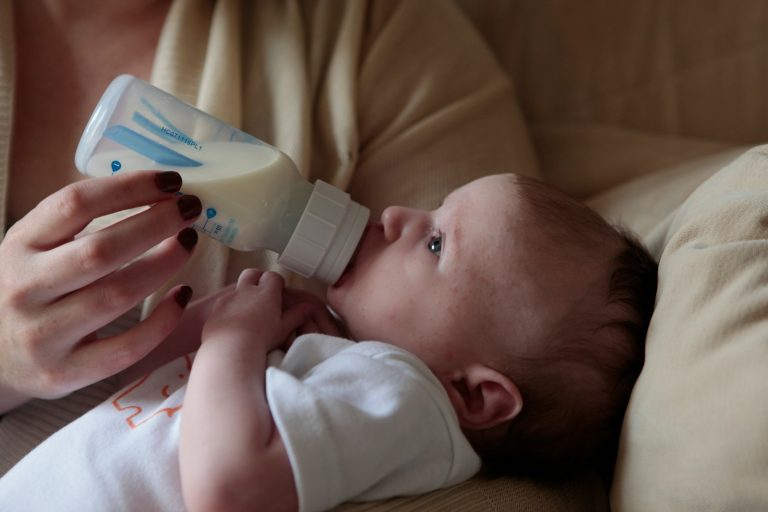
Photo by Jessica Hearn: Unsplash

 Amy R
Amy R
 Ayodele Akenzua
 kellybryson

 Farah
Farah